Easy as 1, 2, 3

On August 28, Mrs. Edwilyn Madelo-Lim gave a lecture on statistics. It was mainly a review of the biostatistics I had when I took my undergraduate studies. We were able to achieve program outcomes #4 (engage in research) and #7 (life long learning), and #6 (systems based approach).

It was good to go over the important aspects of statistics since it’s so vital to our research. I had forgotten some of the things that were mentioned and the lecture was a welcome refresher. I think we sometimes overlook understanding the math of it all because we have the university statistician. We still have research in the future so I can understand why it’s necessary to inform us about this part of the process. There were some parts of the lecture that were new to me even though I thought we covered everything in my previous biostatistics. If we ever need help, we will ask the statistician how to proceed correctly.

I was reminded of the importance of statistics to our study. Understanding the data we gather is one of the most important things. We will probably need some more guidance but I’m glad to have many resources at school. It was slightly confusing when we did our study before so I’m quite anxious about how things will go from here.

I will review the things we learned in the statistics lecture so that it will be easier to apply to our research paper. It might also help to go back to the other lectures related to research to piece the big picture together. This lecture and the one about sampling techniques will be very useful.

This lecture was informative and important. When it was announced, we weren’t too excited about it but we all know it will help us in the days to come. I know I will be able to apply the things I’ve learned soon enough.
Being a Good Doctor of Medicine 101

Both the Cebu Doctors’ University VMG and the 10 program outcomes stated in CHED’s CMO18 aim to produce a well-rounded health care professional through outcome-based education. Through the small group discussions and the problem based learning, we are able to achieve these outcomes. With our student discussions, we are able to practice communication, leadership, teamwork, life long learning or self-improvement, and engaging in research. In out patient-doctor relationship subject, we get a better understanding of clinical competence, systems based approach, social accountability, and how to adhere to ethical, professional, and legal standards. Through serving the community we are in, we achieve nationalism.

I have been in this university since my undergraduate days and I believe these outcomes are well within reach. CDU promotes being a service-oriented individual that is compassionate and dedicated. The teaching and learning methods used here, such as the small group discussions and the independent studies, help me work better with others and with myself. By being consistent and focused, I hope to reach the standards set by the school and CHED.

Problem-based learning and the small group discussions were new to me but I think it’s the best way to be able to attain the outcomes as stipulated by CHED. I am practicing my communication and leadership skills more and more each week. As the journey goes on, my fellow students and I will improve on the other outcomes as well.

I must constantly push myself to interact and work with others since I am quite introverted. Since this year started, I feel more confident is voicing my thoughts and opinions so I think the teaching methods employed here are very effective.

Overall, I find the CDU VMG capable of helping me reach my dream. It’s done a good job of keeping me on track and in line with the program outcomes. In the years to come, I pray I can continue to make my way towards being an effective and caring doctor of medicine.

A Little Birdie Told Me…

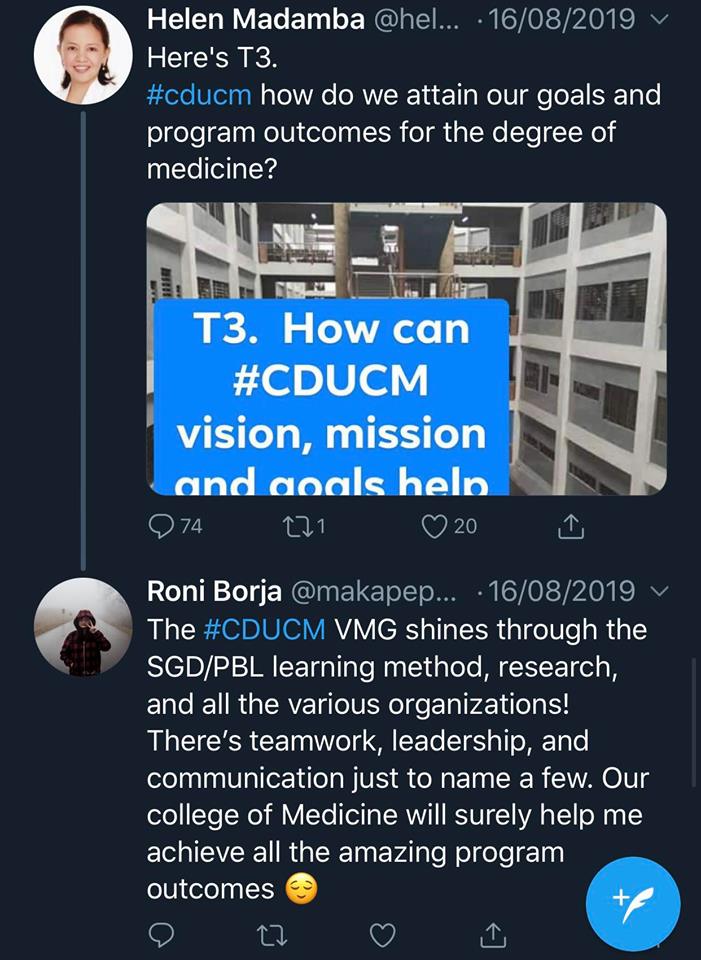
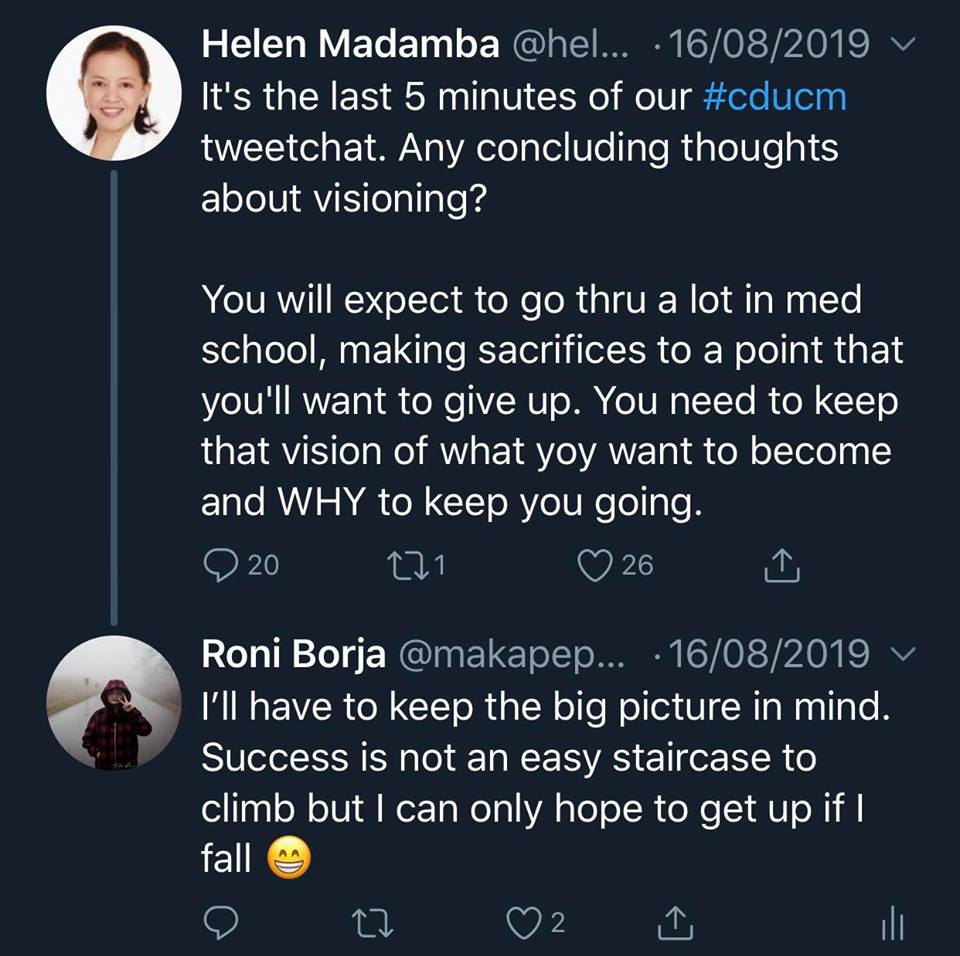
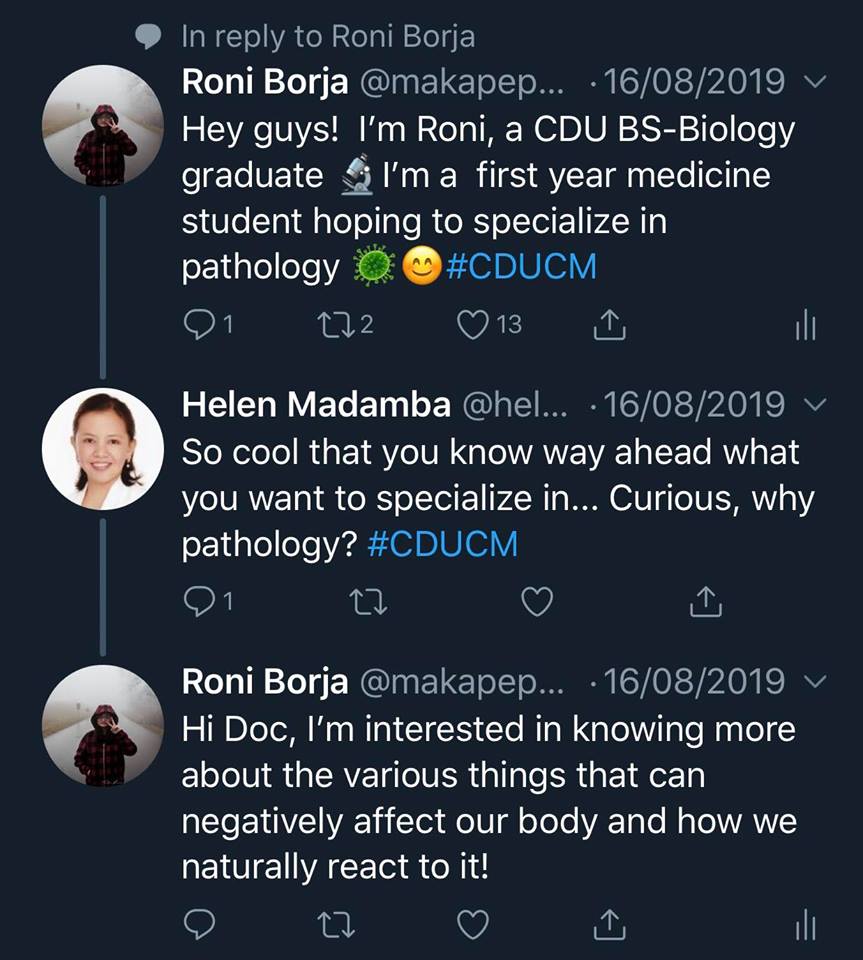
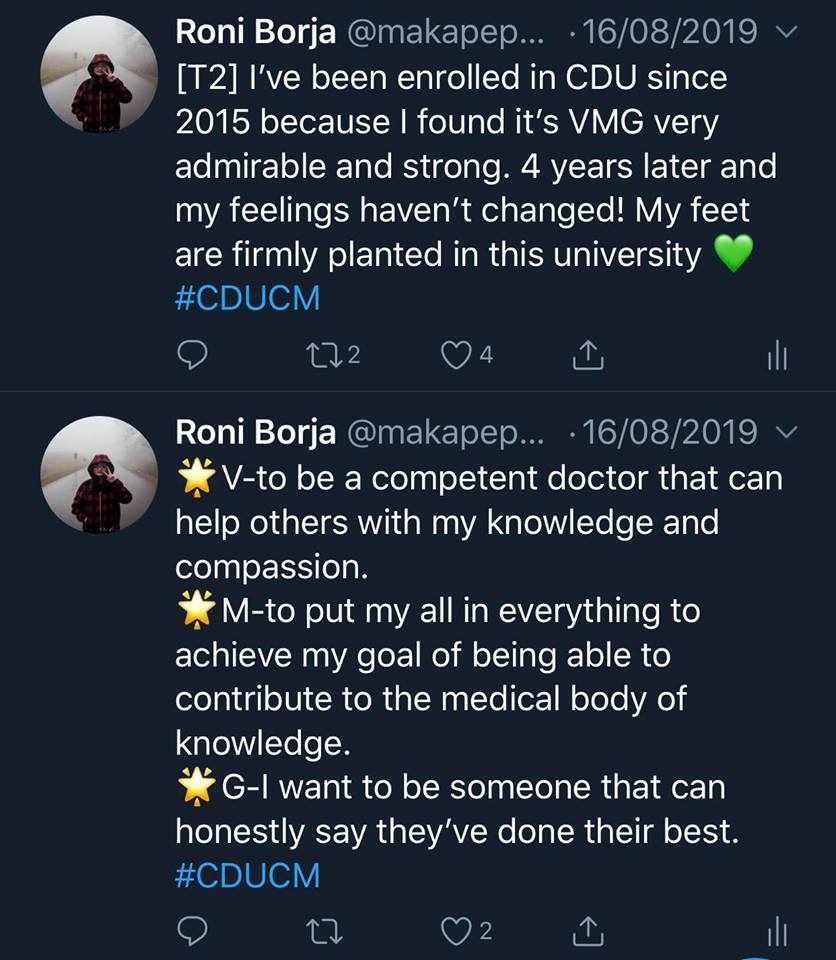
On August 16, we had our first Tweetchat! It was a strange experience, since I never used Twitter to communicate with my professors before, unlike Facebook messenger. The hashtag for this was #CDUCM. I felt awkward putting my opinions out into the open like that about topics such as my goals in life. Doctor Madamba eased us into it by starting off with introductions. I was surprised when I received a reply from her! From there, it became somewhat easier to tweet and share my thoughts on the questions she asked us. We shared our vision, mission, and goals. We were also asked if we thought we were in the right place. I replied with my plans for the future and how I would try and achieve them. I also said that I was sure Cebu Doctors’ University has and always will be the place for me. The third question asked us how CDU would help us attain our own goals and those of the program outcome. The method of problem based learning and the small group discussions are a very good way to reach both outcomes. Finally, as a closing question, Doctor Madamba inquired if we had any thoughts regarding out visions and how we would deal with the future obstacles we face. Of course, medicine is not an easy journey. Like with everything else in life, you have to stay focused and passionate. I believe that will carry me through this long road.

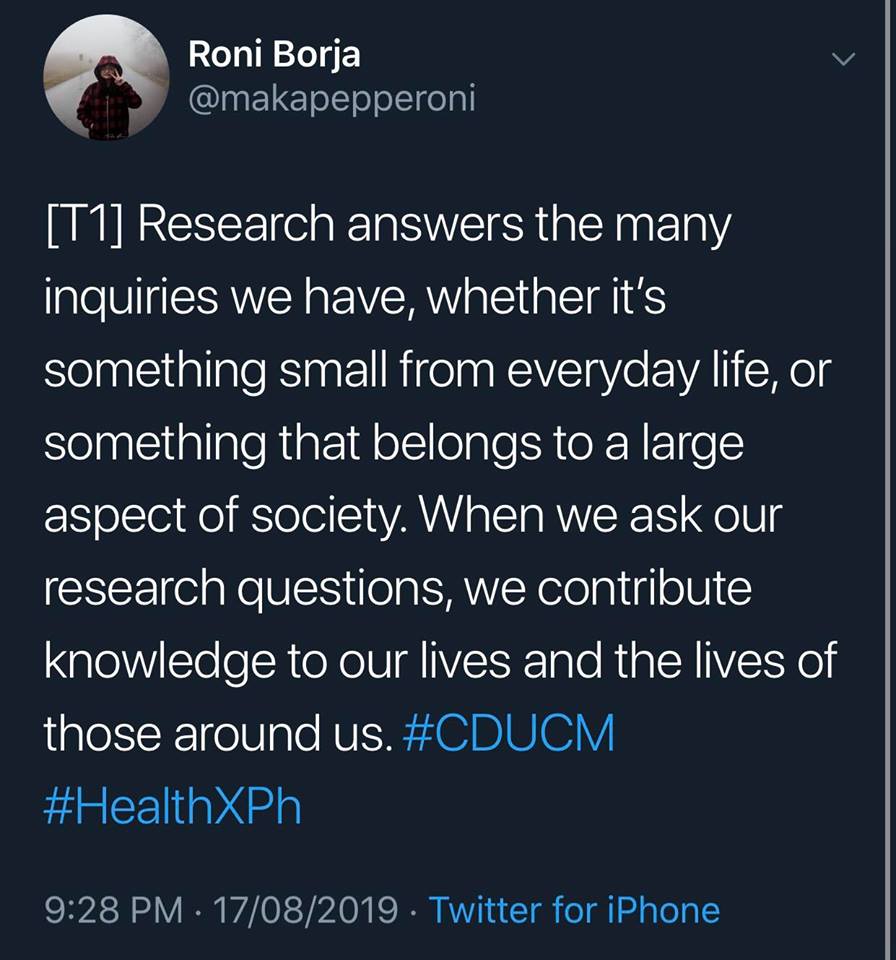
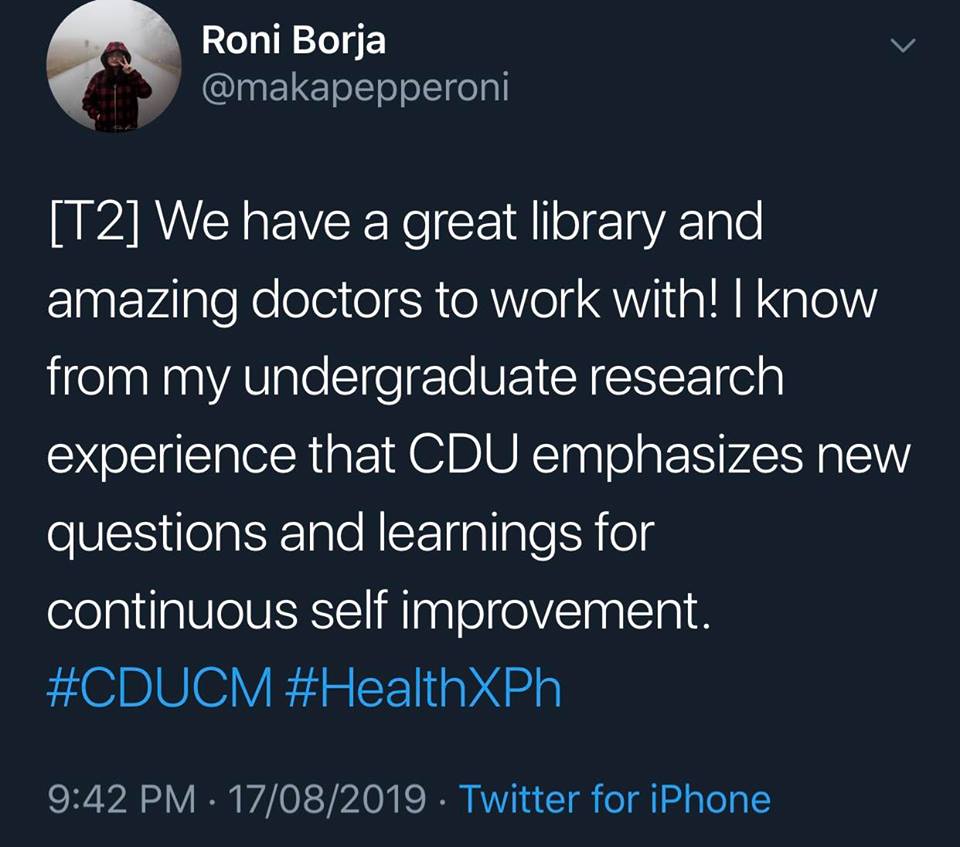
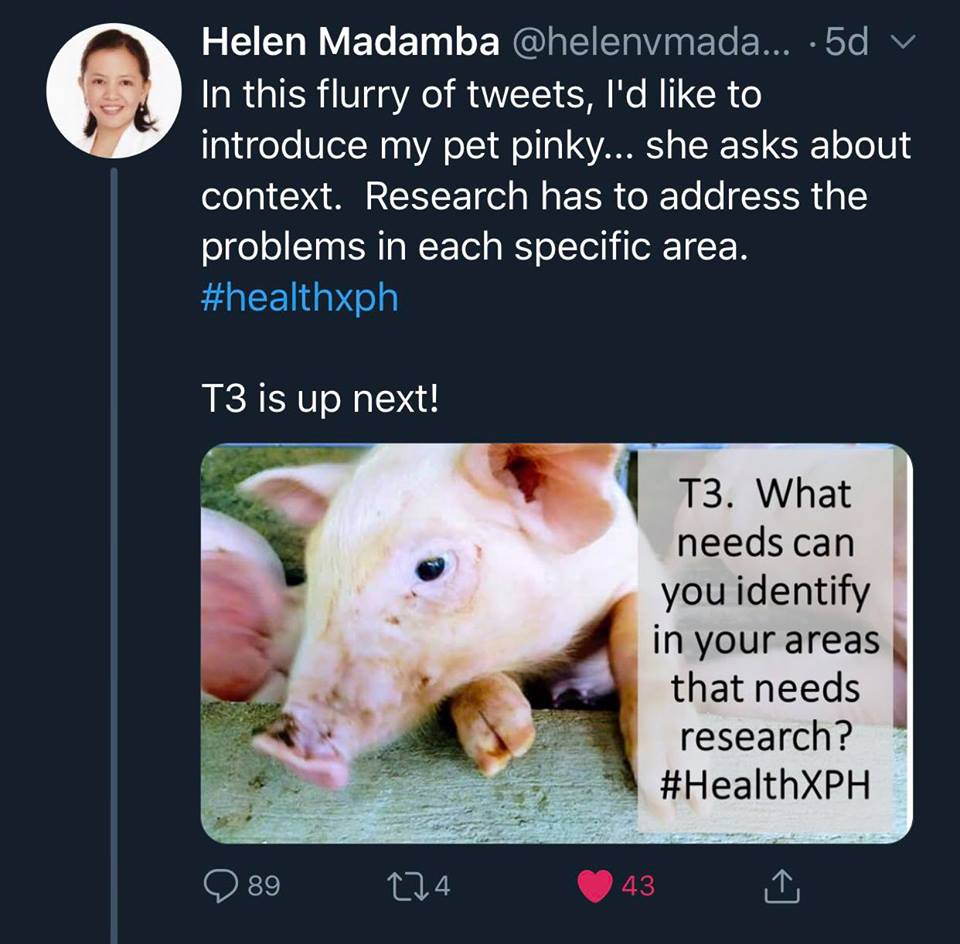
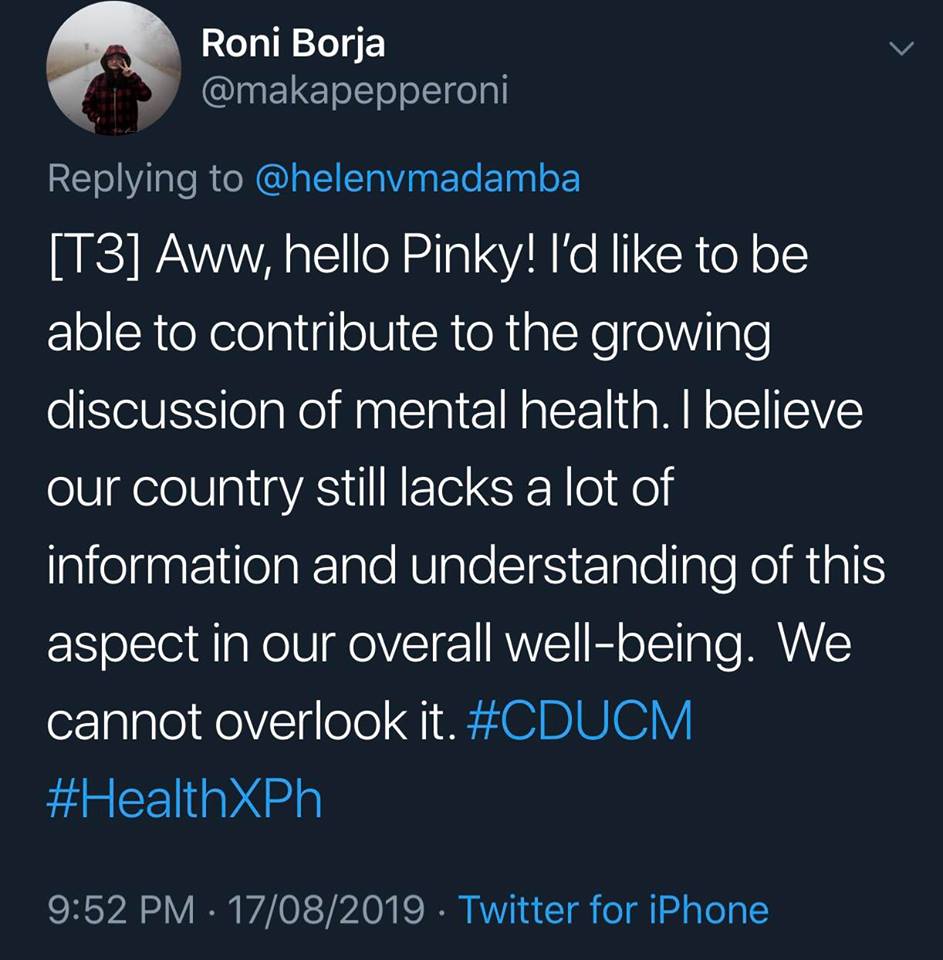
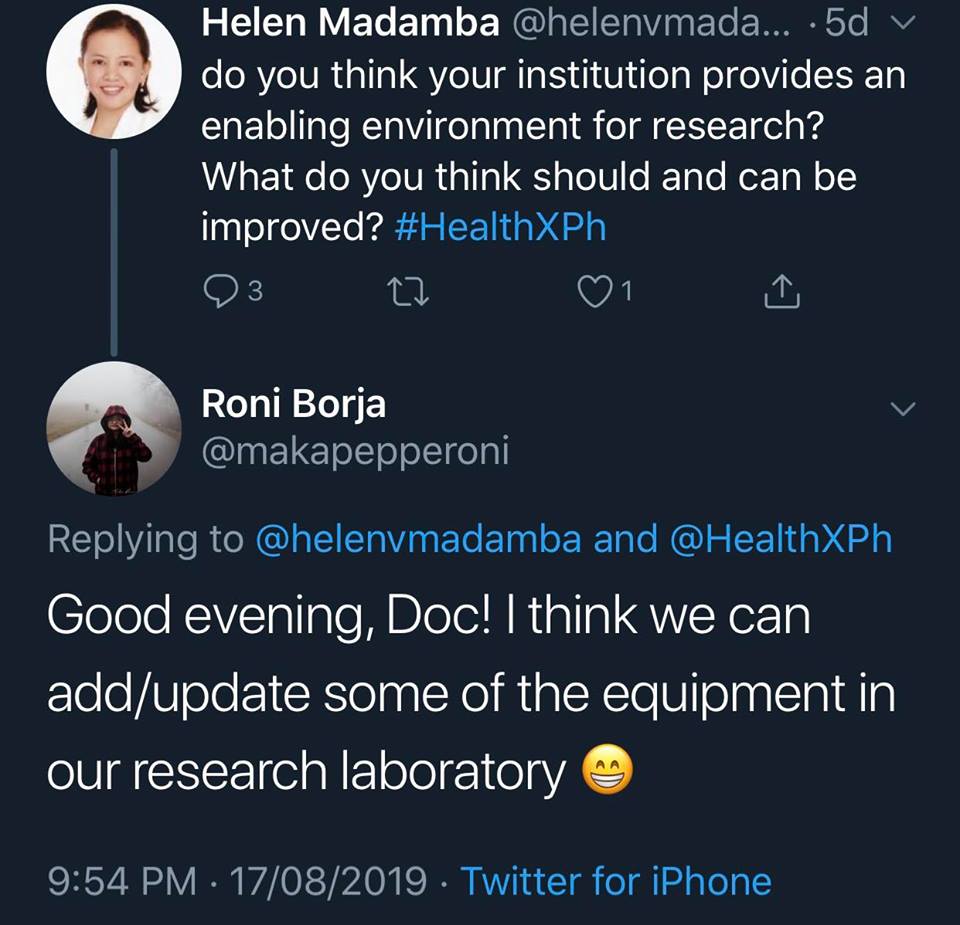
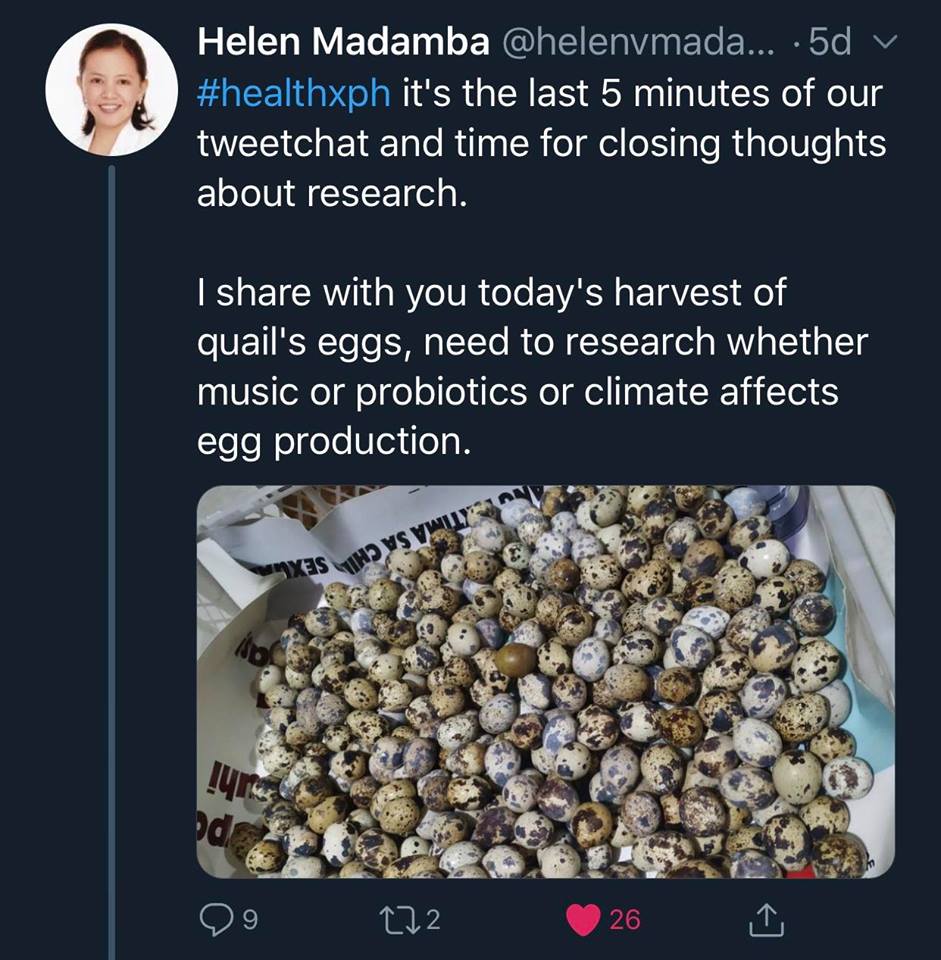
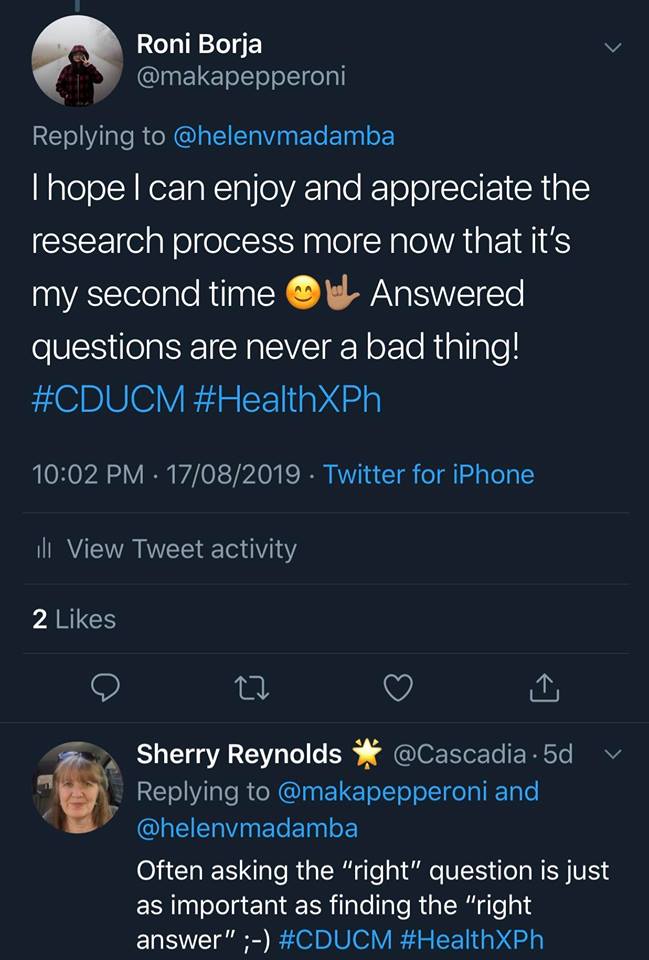
The following day, another Tweetchat was held, this time with the hashtag #HealthXPh. There were 3 questions regarding research. When asked why research is important, I answered that it answers so many of our questions and that it expands our level of knowledge. I know CDU has a conducive environment for research since it has a great library and a laboratory. In all honesty, however, I think some of our apparatuses could be improved but that’s not an urgent matter. Doctor Madamba’s pig, Pinky, asked the final question: what needs can you identify in your areas that need research? My reply to Pinky was that I wanted to study and contribute to the topic of mental health because I feel the Philippines lacks understanding towards this aspect of our health. In the last 5 minutes, I shared my concluding thoughts on research and said that I hoped to enjoy it more than I did when I was doing my undergraduate studies. I also got a reply from a doctor emphasizing the equal importance of asking the right questions and finding the right answers!

The questions were always very thought provoking so I was able to enjoy answering them. My favorite aspect of the Tweetchat would have to be all the interactions happening online. I would see tweets from my classmates and friends as well as other professionals who joined in. It felt nice when my thoughts and tweets got noticed because I felt heard. I look forward to more online interactions with professionals in various fields and experiences!

Life, Death, and All Things in Between

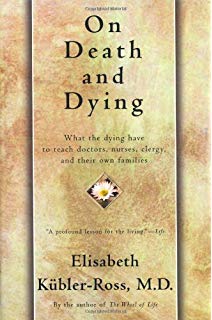
What I look for in an idol physician-researcher: Swiss-born psychiatrist, pioneer in near-death studies, and is an author of a groundbreaking book On Death and Dying (1969). Elisabeth Kübler-Ross, M.D. hits all of my criteria, how amazing! Doctor Kübler-Ross was the first to discuss what is now known as the Kubler-Ross Model. She proposed the famous pattern of adjustment known as the Five Stages of Grief. These stages are denial, anger, bargaining, depression, and acceptance. There is no definite or concrete sequence, but generally, individuals experience this when confronted with the reality of their inescapable death. These stages can also be applied to those dealing with the death of a loved one.

Elisabeth Kübler was born in Zurich, Switzerland and was one of triplets. Initially, her family did not want her to take medicine, but she persisted and eventually gained their approval. She married and moved to the United States. When she became pregnant, she was disqualified for a residency in pediatrics and took up one for psychiatry. As she started, she was disappointed in the way they treated patients who were dying. She held lectures on terminally ill patients to forcing the medical students to face patients who were dying.

She introduced the Five Stages of Grief in her book On Death and Dying. This later became a standard text for health care providers with patients who were terminally ill. Dr. Kübler-Ross went against taboo and changed the way people dealt with death. Her work eased the difficulty patients, their families, and health care providers face when dealing with terminal diseases and death.

I admire how she persevered all throughout her life, like her family not encouraging her taking medicine and being denied a residency in pediatrics. The phrase “when one door closes, another one opens” comes to mind when I think of how she took up psychiatry and made such an important contribution. It’s necessary for health care professionals to know how to deal with hard topics like terminal illness and death. Not only must we try to heal our patients, we also have to support them emotionally and be sensitive. The five stages maybe somewhat overlooked since it’s been around for a while. However, it’s helpful to have somewhat of a guide when handling such extreme emotions. I hope to be as caring and passionate as she was.

VMG: Very Mediocre Girl…?

Vision

I envision being a confident, compassionate, and well-rounded medical practitioner.

Mission

I am committed to becoming a competent professional who can collaborate with other students to enrich the lives of those around me.

Goals

1.) Improve interpersonal skills by forming strong bonds with fellow medical students.

2.) Develop the confidence to speak my mind for effective learning and sharing.

3.) Find a balance between studies and my various hobbies and interests.

I hope as my journey goes on, I will be a Very Magnificent Girl.

Oh, me?

Hello!

I’m Roni Borja, a first year medical student. I’ll be writing about my experiences here so that I have something to look back on as the years pass.

If we’ve spoken, then you might’ve noticed I have an American accent. I was born in Bohol but I moved to the United States when I was three. I was a home-schooled only child, so I didn’t interact with many people my age. I took up various activities such as piano, karate, and ballet, but I never connected with anyone. Despite this, I never felt lonely, since I had my parents and extended family.

When I was 12 years old, I moved back to the Philippines for high school. I made so many memories and friends that helped me come out of my shell. I was able to discover more about myself because I had people to talk to and grow with. I believe this experience has changed me the most.

These first few days of medicine have had me questioning whether or not Biology was a good choice for pre-med. I feel a bit lacking in skill but maybe I’m just overthinking it. It’s already quite overwhelming. A few days ago, I caught myself saying “I didn’t sign up for this”, although I did sign up for it and there is no turning back. Oh, well. I’ll have to power through another four years. What’s important is in the end, I’ll be able to help and serve the community. That’s what keeps me going.

So, if you’re interested in biology, medicine, BTS, and anime, you’ve come to the right blog! Enjoy!

Design a site like this with WordPress.com
Get started